Last Updated: November 17, 2026
Quick Summary
Permanent makeup color is kept in the upper skin layers, and it slowly fades as your body sheds some pigment over time. Its lasting power depends on your skin type, aftercare, lifestyle, and how the pigment was placed, and touch-ups help refresh the look.
- Avoid picking at scabs or flaking skin, since this pulls out pigment.
- Wear sunscreen on treated areas once healing is complete, because UV exposure changes pigment tone.
- Tell your artist if you use retinoids, AHAs, or BHAs before your appointment.
- Judge your final result only after healing is complete, since color changes at each stage.
- Book a touch-up when color looks faded, uneven, or shape seems off.
Table of Contents
- How Permanent Makeup Color Retention Works
- The Healing Stages: What Your Brows or Liner Will Look Like
- Permanent Makeup Aftercare That Protects Your Pigment
- Why Permanent Makeup Changes Color Over Time
- How Long Permanent Makeup Lasts and When to Book a Touch-Up
- Common Retention Mistakes to Avoid
- Booking Your Permanent Makeup Consultation at Lash Box Syosset
- Frequently Asked Questions
How Permanent Makeup Color Retention Works
Permanent makeup color is placed into the upper layers of the skin, called the dermis and epidermis. Over time, your body slowly breaks down and sheds some of that pigment. This is normal. It is why most permanent makeup needs touch-ups to keep its look.
Color retention depends on several things working together: your skin type, your aftercare, your lifestyle, and how the pigment was placed.
Here is the short version:
- Pigment settles into the skin during healing
- Some color naturally fades over the following months
- Good aftercare slows fading and keeps the color clean
- Regular touch-ups help the color look fresh
Here is a quick summary of the main factors that affect how long your color holds.
| Factor | Effect on color | What to do |
|---|---|---|
| Skin type | Oily skin can blur pigment faster | Discuss your skin type with your artist |
| Aftercare | Good aftercare slows fading | Follow your aftercare instructions |
| Lifestyle | Habits influence how long color lasts | Adjust habits where possible |
| Pigment placement | Affects how the color settles | Trust your artist's technique |
| Touch-ups | Help refresh the color | Book when color looks faded |
The Healing Stages: What Your Brows or Liner Will Look Like
Healing happens in stages, and the color looks different at each one. Knowing what to expect can help you stay calm and avoid worrying too early.
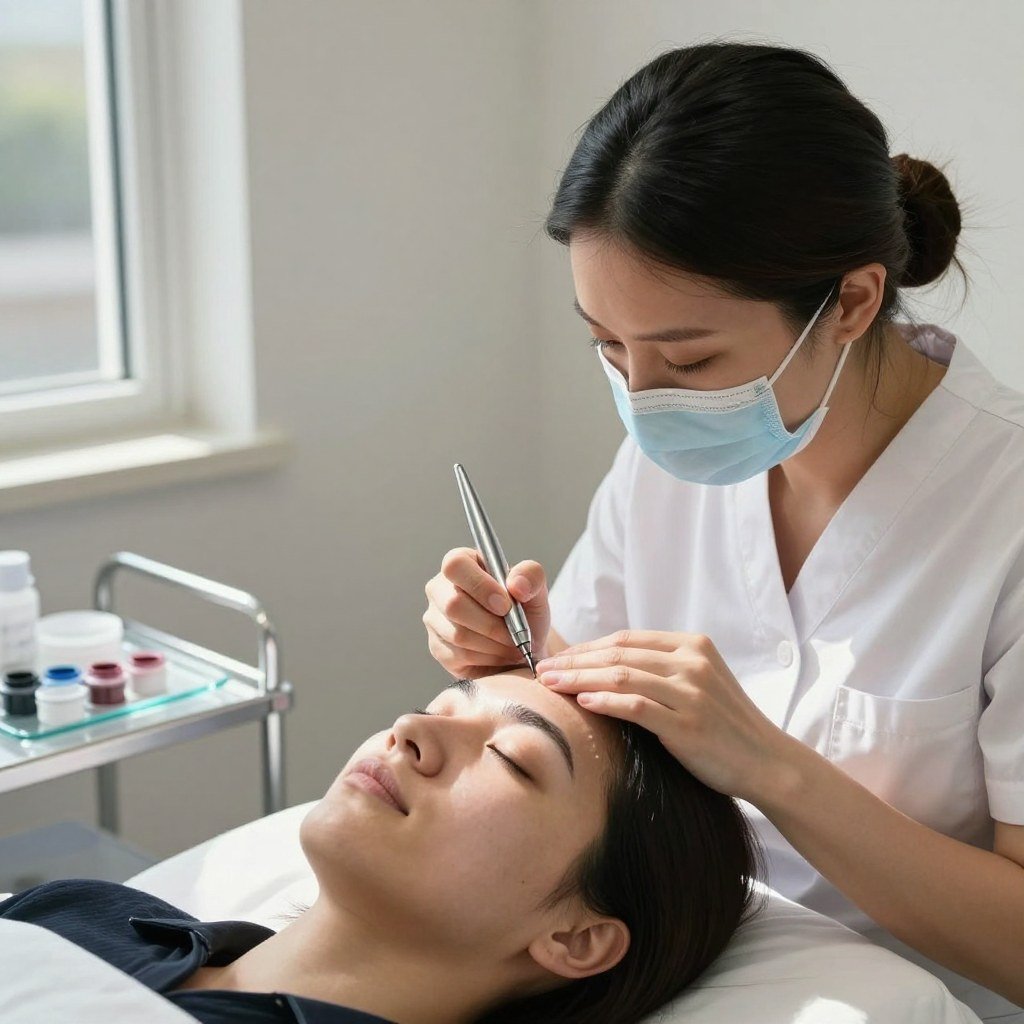
Stage 1: The first few days. The area may look darker and feel tender. Some clients notice slight swelling or redness. This is a normal response to the treatment.
Stage 2: Peeling or flaking. Over the next week or so, the skin may dry out and flake. Color can look lighter or patchy during this time. Do not pick at the skin, because this can pull out pigment. To see how the two techniques heal differently, compare microblading and powder brows.
Stage 3: Settling. Once the skin has finished healing, the color softens and settles. This is when you see the true result. It can take several weeks for the final look to appear.
Keep in mind that the color will look different from one stage to the next. Judge the final result only after healing is complete.
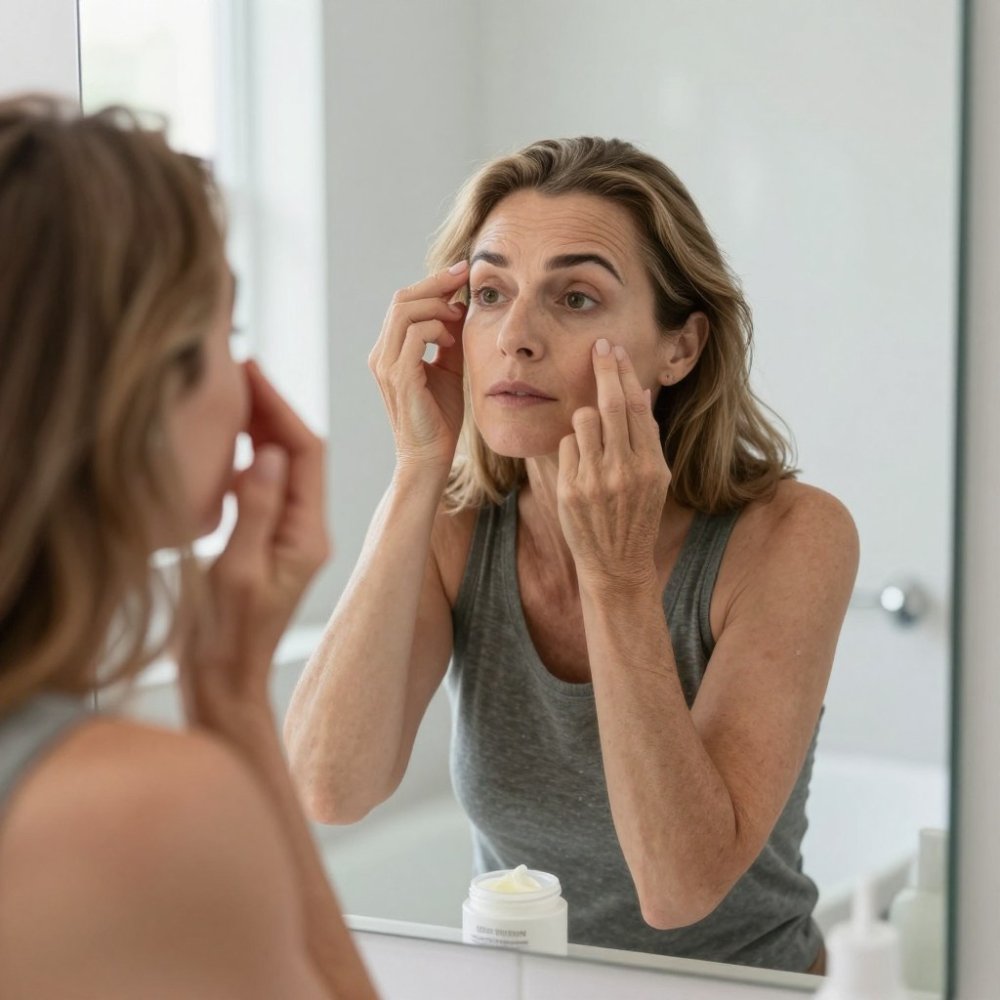
!A woman in her 50s examining her eyebrows in a bright, softly lit bathroom mirror, with a small jar of gentle aftercare balm on the counter
Permanent Makeup Aftercare That Protects Your Pigment
Aftercare is not just a checklist. It is the window during which your skin decides how much pigment to keep. Understanding why each step matters makes it easier to follow through, especially in the first two weeks when the barrier is open and the pigment is still settling.
The first 48 hours: keeping the barrier intact. Fresh permanent makeup creates tiny micro-channels in the epidermis. During this window, the priority is keeping the area clean without disrupting the forming scab. Keeping the area clean with a gentle cleanser and a thin layer of the balm your artist provides helps protect the healing skin.
Days 3 through 14: supporting the flaking phase. As the skin begins to flake, the pigment is locked into the dermis but the surface is still remodeling. This is when clients are most tempted to pick or scratch. Picking removes pigment that has not fully settled and can create gaps that require a touch-up to correct. For more on what safe care involves, read our professional permanent makeup safety tips. Keep the area moisturized with the recommended balm, but let flakes shed on their own.
Why water and heat matter more than you think. Soaking in pools, hot tubs, or long showers softens the stratum corneum and can draw pigment outward before it has stabilized. Chlorine and salt water add chemical irritation on top of that. Saunas and heavy sweating create the same risk by increasing blood flow and loosening the surface layer.
The role of sunscreen after healing. Once the skin has closed, daily sunscreen becomes the single most protective habit for color longevity. UV exposure breaks down pigment particles and can shift warm tones toward gray or cool tones toward blue over time.
Skincare ingredients to flag for your artist. Retinoids, AHAs, and BHAs accelerate cell turnover, which means they push pigment out of the skin faster. If these are part of your routine, tell your artist before your appointment so they can adjust placement depth or discuss timing. This is not a reason to avoid these products entirely, but it is a conversation worth having.
A note for aspiring artists. Aftercare instructions are only as good as the client's understanding.
Why Permanent Makeup Changes Color Over Time
Permanent makeup can shift in tone as it ages.
Pigment can look cooler, warmer, or softer over the years. Your skin's natural undertone plays a role, and so does how your body processes the pigment. Color is not static, even when the placement is good.
How Skin Type and Skincare Acids Affect Fading
Skin type has a big effect on how long color lasts. Oily skin can cause pigment to blur faster, while dry skin may hold color differently. Everyone's skin is unique, so results vary.
Some skincare ingredients can also speed up fading. Exfoliating acids, such as glycolic or retinoid products, can thin the outer layers of skin over time. If you use these products, talk with your artist before your appointment so they can adjust their approach.
Sun Exposure and Environmental Factors
Sun exposure is one of the biggest factors in color fading. UV rays can lighten pigment and change its tone. Wearing sunscreen and a hat outdoors helps protect your color.
Other environmental factors also matter. Frequent swimming in chlorinated pools and regular use of hot tubs may affect how quickly color softens. Being mindful of these habits can help your results last longer.
How Long Permanent Makeup Lasts and When to Book a Touch-Up
Most permanent makeup is not designed to last forever. Many clients enjoy their results for a year or more, but timing depends on the individual.
A touch-up usually helps refresh the color and correct any uneven areas. To weigh the costs and benefits before committing, see our balanced guide to whether permanent makeup is worth it. Your artist can advise on the best timing for your specific treatment.
Watch for these signs that a touch-up may be helpful:
- The color looks faded or uneven
- Shape or symmetry seems off
- You want a fresher, more defined look
Touch-up timing is best discussed directly with your artist, who can review your healing and results.
Common Retention Mistakes to Avoid
A few common habits can shorten how long your color lasts. Watch out for these:
- Picking at scabs or flaking skin
- Skipping sunscreen on treated areas
- Using harsh exfoliants too soon after treatment
- Ignoring aftercare instructions
- Expecting perfect color during healing
Avoiding these mistakes can make a real difference in how your color looks over time.
Booking Your Permanent Makeup Consultation at Lash Box Syosset
Ready to talk about your options? A consultation is the best way to learn what color retention looks like for your skin and goals. Lash Box Syosset offers permanent makeup services, and you can book a permanent makeup consultation online to get started.
For a closer look at what each service involves, you can also review our permanent makeup options.
Pricing and availability depend on your chosen service and schedule, so please check our website or contact the studio for current details. Visit lashboxny.com to see services and book your visit.
Frequently Asked Questions
How long does permanent makeup color usually last?
Permanent makeup is not truly permanent. Most pigment softens and fades gradually, and many clients see noticeable lightening within one to three years. How long color lasts depends on the area treated, the pigment used, your skin type, and how much sun exposure and skincare you deal with. Oilier skin tends to hold color differently than drier skin. Many people book a color boost or touch-up session once or twice a year to keep the shade looking fresh.
Is it normal for permanent makeup to look lighter during healing?
Yes. During the first few weeks, pigment often looks darker or sharper right after the procedure, then lightens as the skin heals and flakes away surface color. Some clients see patchy areas or a softer shade during this phase. This is part of the healing process and does not mean the color failed. The true color typically settles after the full healing period, which is why a follow-up visit is usually scheduled to assess and refine the result.
Can oily skin affect permanent makeup retention?
Oily skin can influence how permanent makeup holds its color. Excess oil and natural shedding of skin cells can speed up surface fading, and oil production may also affect how pigment settles. Gentle, non-abrasive skincare and consistent aftercare help protect the pigment. Discuss your skin type with your artist so they can plan the depth and pigment choice for your face and suggest a suitable touch-up schedule.
When should I consider a permanent makeup touch-up?
Most clients schedule a touch-up after the initial healing period, once the artist can see how the color has settled. Afterward, a color boost is often recommended when the shade starts to look faded, uneven, or washed out. Many people refresh their color once a year, though some need more or less depending on skin type, lifestyle, and sun exposure. Visit lashboxny.com for current services and to book your appointment online.
