Table of Contents
- Microblading vs Powder Brows: Core Differences
- Natural Appearance: Hair Strokes vs Soft Shading
- Microblading or Powder Brows for Oily Skin
- Powder Brows Healing Process and Recovery Timeline
- How Long Do Powder Brows Last and Touch-Up Needs
- Powder Brows vs Microblading Cost and Value
- Pain, Discomfort, and What to Expect During Treatment
- Making Your Decision: Which Technique Is Right for You
- Frequently Asked Questions
Last Updated: October 19, 2026
Microblading vs Powder Brows: Core Differences
The choice between microblading and powder brows shapes your healing, naturalness, longevity, and maintenance. The answer depends less on which is "better" and more on which matches your skin, lifestyle, and aesthetic goals.
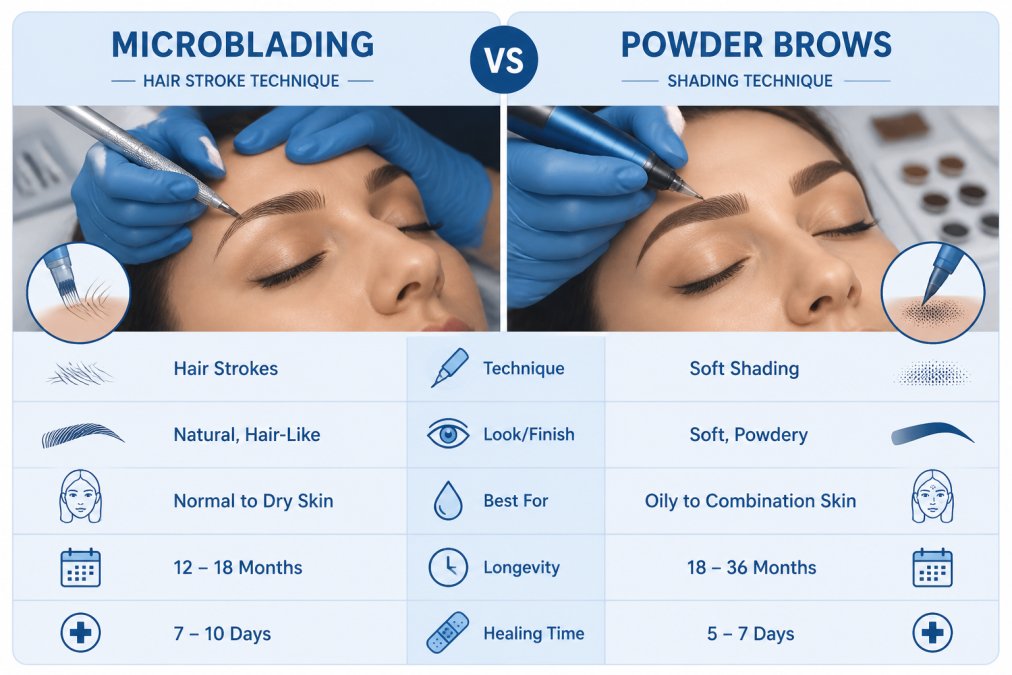
Microblading creates individual hair-stroke impressions using a manual blade, while powder brows apply pigment with a soft, shaded finish similar to eyebrow makeup. The distinction matters because it affects pigment retention, appearance over time, and suitability for different skin types.
How Microblading Works
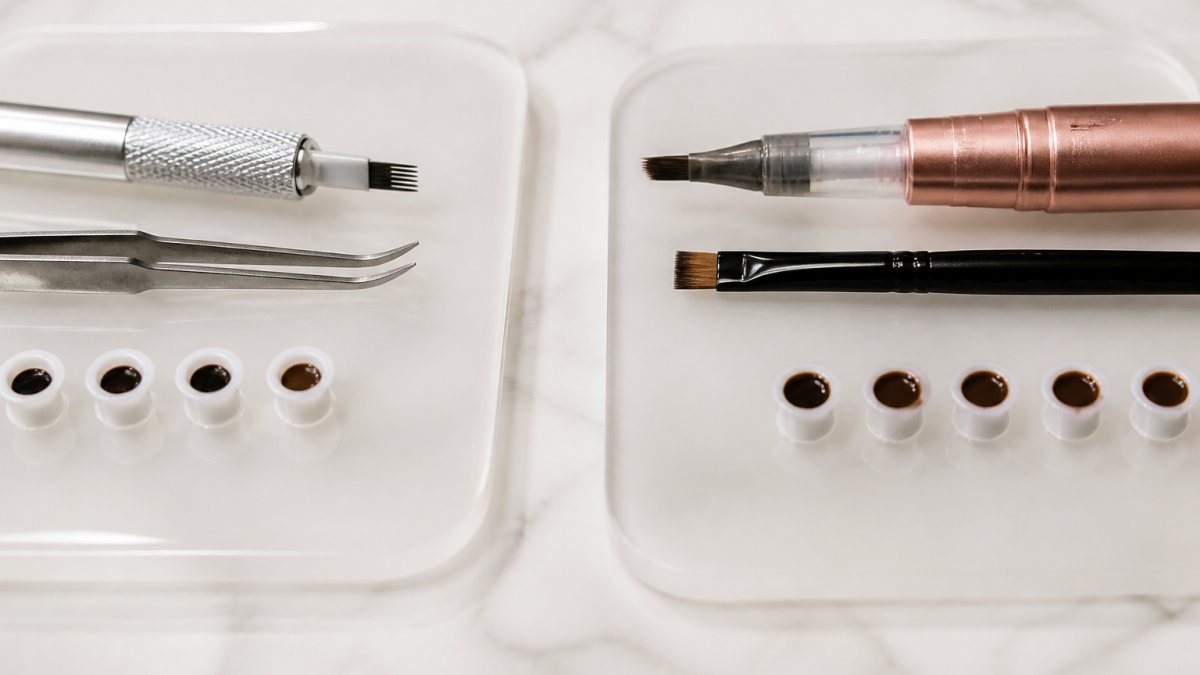
Microblading uses a handheld tool with multiple fine needles in a blade configuration. The technician manually creates shallow incisions in the skin's superficial layer, depositing pigment so each stroke mimics a natural hair. The technique demands real skill, brow anatomy, facial symmetry, and customizing strokes to hair growth, so choosing an experienced artist with a strong portfolio matters.
How Powder Brows Work
Powder brows, sometimes called ombré brows or powder fill, use a digital machine to apply pigment in a stippled, dotted pattern, creating a soft gradient that's darker near the brow line and lighter toward the arch and tail.
Natural Appearance: Hair Strokes vs Soft Shading
Microblading delivers individual hair strokes that, done well, are nearly indistinguishable from natural brow hair. Powder brows create a softer, blended look that mimics filled-in brows.
Neither is inherently more natural, it depends on your preference and existing brow density. Clients with sparse brows often prefer microblading because the hair-stroke effect fills gaps convincingly; those with some existing hair may prefer powder brows for a polished, makeup-like finish.
Microblading or Powder Brows for Oily Skin
Oily skin presents a real challenge for microblading: oils push pigment outward during healing, causing strokes to blur, spread, or lose definition and look muddy after a few months.
If you have oily skin and prefer hair strokes, discuss it openly with your technician, some minimize blur, but results are less predictable than powder brows. Dry or combination skin has fewer restrictions; both work well, though microblading offers superior crispness.
Powder Brows Healing Process and Recovery Timeline
Most disappointing results are decided during healing, not in the chair. Both techniques pass through the same phases, but visible milestones differ: microblading disrupts skin with shallow incisions, while powder brows deposit pigment via a stippled machine pattern. Knowing what is normal on which day separates panic from catching a real problem early.
The four phases, day by day
Days 1-2 (initial healing). Brows look 20-40% darker, inflammation, not true color.
Days 3-5 (scabbing begins). Thin flakes form along the brow.
Days 6-10 (flaking and the 'ghost' phase). Scabs shed unevenly, and brows can look patchy, faded, or nearly invisible in spots, the phase that alarms first-time clients.
Weeks 2-4 (color returns). Pigment resurfaces as skin settles, blooming back to roughly 70-80% of post-treatment intensity.
Weeks 4-6 (settled result). Healing is complete.
Aftercare that actually protects retention
- Cleaning: Gently cleanse the brow area once or twice daily with a mild, fragrance-free cleanser and pat dry, do not rub.
- Moisturizing: Apply a thin layer of the aftercare ointment your artist provides 2-3 times daily for the first 5-7 days. Too much product suffocates the skin; a rice-grain amount per brow is typical.
- Water and sweat: Keep brows dry for the first 7-10 days. No swimming, saunas, steam rooms, or heavy sweating. Shower with your face away from the direct stream.
- Sun: Avoid direct sun and tanning beds for at least 2 weeks; UV exposure fades pigment faster and can cause uneven healing.
- Skincare actives: Keep retinoids, AHAs/BHAs, vitamin C, and exfoliants off the brow area for 2 weeks. These accelerate pigment breakdown.
- Makeup: Avoid brow makeup and foundation over the treated area until flaking resolves, usually 7-10 days.
Warning signs that warrant a call to your provider
Mild redness, itching, and flaking are normal. Contact your practitioner, and seek medical care if severe or spreading, for:
- Increasing pain, swelling, or warmth after day 3 rather than improvement
- Thick yellow or green discharge, or a foul odor
- A spreading rash, hives, or blistering (possible allergic reaction to pigment or numbing agents)
- Fever
- Excessive bleeding that does not stop
If you have a history of cold sores, tell your provider before treatment, brow procedures can trigger outbreaks, and many artists recommend antiviral prophylaxis.
Microblading vs powder brows: how healing differs
Microblading's shallow incisions mean more surface disruption and visible flaking along each stroke; blurred strokes during healing are more common on oily skin. Powder brows heal with a more uniform flake and smoother color return, which is why they're often recommended for predictable recovery.
How Long Do Powder Brows Last and Touch-Up Needs
Powder brows typically last 18-24 months before noticeable fading, varying by skin type, sun exposure, skincare, and pigment retention. Oily skin may fade faster as oils break down pigment; dry skin often retains color longer.
Book your appointment online →
Most clients schedule their first touch-up around the 12-month mark to refresh color and adjust shape; it typically takes 1-2 hours, shorter than the initial appointment.
Powder Brows vs Microblading Cost and Value
Pricing varies by location, artist experience, and complexity. Rather than comparing raw costs, weigh value: microblading needs more frequent touch-ups and carries higher risk on certain skin types, while powder brows demand less maintenance and perform predictably across skin types.
The initial investment is significant, but cost-per-wear drops when you factor in the 18-24 month lifespan and daily makeup time saved, no morning brow routine, no smudging during workouts or humid weather.
Pain, Discomfort, and What to Expect During Treatment
Most clients report microblading causes more discomfort than powder brows, though tolerance varies.
Powder brows use a machine that creates a buzzing sensation.
Topical numbing cream is applied before and sometimes during treatment. Effectiveness varies, some feel almost nothing, others consistent mild discomfort.
Bleeding is minimal with both techniques; light oozing is normal, and small dots of blood (or none) don't indicate a problem or affect results.
Making Your Decision: Which Technique Is Right for You
'Dry skin, pick microblading; oily skin, pick powder brows' is a starting point, not a decision. Weigh four inputs together, skin type, existing brow hair, desired finish, and maintenance tolerance, then add the two factors that determine whether you'll be happy a year later: who performs the service, and what happens if you want to change course.
A practical decision matrix
| Your situation | Stronger starting point | Why |
|---|---|---|
| Oily or very oily skin | Powder brows | Oil pushes pigment outward; crisp strokes blur, while soft shading forgives movement |
| Dry or normal skin | Either, microblading if you want hair strokes | Dry skin holds crisp strokes well |
| Combination skin | Either; assess the T-zone | Oilier brow areas favor powder; drier areas hold strokes |
| Large sparse gaps, little natural hair | Microblading, or a combo (strokes + shading) | Strokes create the illusion of hair where none exists |
| Some natural hair, wants polish | Powder brows | Soft shading blends with existing hair and looks like makeup |
| Sensitive or reactive skin | Consultation first; patch test | Pigment and numbing agents can trigger reactions |
| Very active / heavy sweater | Powder brows | More even fading and less risk of stroke blur |
| Wants the most natural possible look | Microblading (well executed) | Individual strokes read as hair at conversational distance |
| Wants a defined, filled look | Powder brows | Gradient shading mimics brow powder |
| Low maintenance tolerance | Powder brows | Fades evenly; fewer corrective touch-ups |
A hybrid approach, microblading strokes at the front of the brow combined with powder shading through the arch and tail, is common for clients who want hair realism up front and soft density through the body. Ask whether your artist offers it.
Vetting the practitioner matters more than the technique
Two artists using the same method can produce wildly different results. Before booking, confirm:
- Licensing and training: Check state and local licensing requirements for body-art/tattoo establishments and ask which microblading or machine-shading certification the artist holds.
- Hygiene: Single-use needles and blades opened in front of you, gloves changed between clients, disinfected workstations, and sharps disposed of in labeled containers.
- Portfolio: Ask for healed photos, not just fresh ones. Healed work reveals retention, stroke quality, and color stability. Look for clients with your skin type and tone.
- Patch test: A small pigment patch test before treatment is a reasonable request, especially with sensitive skin or prior reactions.
- Consultation: A good artist maps your brows to your bone structure, discusses color theory for your undertone, and is willing to talk you out of a technique that will not hold on your skin.
Color selection and how results change over time
Pigment is not permanent ink and doesn't fade evenly. Over 18-24 months, color softens and can shift warmer (toward red or orange) as the body breaks down cooler particles. Artists counteract this with a cooler or neutral starting shade, but some warm shift is normal, which is why color consultation and realistic fading expectations matter as much as the technique.
If you want to switch, correct, or remove
- Switching techniques: You can move from microblading to powder brows (or vice versa) after full healing, but the artist must assess existing pigment before layering new work. Stacking too much pigment too soon can look muddy.
- Correction: Uneven or blurred results are often fixable at the touch-up or with a later corrective session; severe cases may need a consult with an artist who specializes in corrections.
- Removal: Laser removal and saline/lightening treatments exist but are not one-session fixes, and laser can interact with pigment unpredictably. Removal is a a separate timeline from the original service, ask about it before you commit.
If you're still torn, book a consultation and ask to see healed examples on clients with your skin type and brow density. The right choice is the one your skin can hold and your artist can execute, not simply the one that looks best on day one.
Frequently Asked Questions
Are powder brows better for oily skin than microblading?
Yes, powder brows generally perform better on oily skin. The soft shading technique deposits pigment slightly deeper and more evenly, which helps pigment retention despite natural oil production. Microblading's fine hair strokes can blur and fade faster on oily skin because oils break down the pigment bonds more quickly. If you have oily skin, powder brows typically require fewer touch-ups and maintain their appearance longer between appointments.
How long do powder brows last before needing a touch-up?
Powder brows typically last 18 to 24 months before a touch-up is needed, though this varies based on skin type, aftercare, and sun exposure. Oily skin may see faster fading, while dry skin often retains color longer. Annual or semi-annual touch-ups maintain the desired appearance.
What is the powder brows healing process like?
Powder brows healing takes 7 to 14 days for initial scabbing to resolve, though full pigment settling continues for 4 to 6 weeks. During the first week, expect mild redness, slight swelling, and scabbing. The color appears darker initially and lightens as healing progresses. Aftercare is critical: avoid water, makeup, and excessive sweating during the first week. Picking at scabs or ignoring aftercare instructions can result in patchy color or infection.
What's the main cost difference between microblading and powder brows?
Initial pricing depends on the artist's experience, location, and technique complexity, so costs vary. Consider long-term value: powder brows typically last longer and require fewer touch-ups, especially on oily skin, which can offset higher initial cost. Contact Lash Box Syosset directly for current pricing and a personalized quote based on your specific needs.
When you're ready to explore semi-permanent eyebrow enhancement, professional guidance makes all the difference. At Lash Box Syosset, our expert team evaluates your skin type, discusses your aesthetic goals, and recommends the technique most likely to deliver lasting, natural-looking results. We offer online booking for your convenience, schedule a consultation today to discover which approach is right for you and take the first step toward eyebrows that work as hard as you do.