Last Updated: October 30, 2026
Quick Summary
Professional facial scarring treatment depends on the type of mark. Microneedling, chemical peels, and laser treatments are the main professional options, and each suits different scar types. A licensed esthetician or dermatologist can assess your skin and recommend the right approach.
- Acne scars are depressions or raised areas, while post-inflammatory marks are flat, discolored spots.
- Microneedling often requires multiple sessions spaced weeks apart.
- Darker skin tones carry a higher risk of post-inflammatory hyperpigmentation after resurfacing.
- Daily broad-spectrum sunscreen is the most important step to protect results after treatment.
- Bring a list of your skincare products and medications to your consultation.
Table of Contents
- Acne Scars, Post-Inflammatory Marks, and Other Facial Scars: What's the Difference?
- Comparison Table: Professional Facial Treatments for Scarring
- Microneedling for Acne Scars: Pros, Cons, and What to Expect
- Chemical Peel for Acne Scars: Pros, Cons, and What to Expect
- Laser Treatment for Acne Scars: Pros, Cons, and What to Expect
- Treatments for Deep Acne Scars and How Sessions Add Up
- Booking Your Scar Consultation at Lash Box Syosset
- Frequently Asked Questions
Acne Scars, Post-Inflammatory Marks, and Other Facial Scars: What's the Difference?
Professional facial scarring can be treated in several ways, but not every kind of facial mark is the same problem. Knowing what you are treating makes it easier to set realistic expectations before you book a professional facial for scarring.
Acne scars are depressions or raised areas left behind after inflammatory breakouts. Post-inflammatory marks are flat, discolored spots that remain after a pimple heals. These are often brown or pink and may fade over time, but they are not true scars in the same sense. Other facial scars can come from injury, surgery, or other skin trauma.
This distinction matters because treatments target different concerns. A professional may approach raised texture differently from uneven pigment. If you are unsure which category applies to your skin, a licensed esthetician or dermatologist can assess it in person.
Comparison Table: Professional Facial Treatments for Scarring
Below is a practical summary of the professional options discussed in this guide. Use it as a starting point, not a prescription, your provider will match the approach to your scar type, skin tone, and sensitivity. For current pricing and availability, visit lashboxny.com.
| Treatment | Best Suited For | Typical Downtime | Sessions Often Needed | Main Consideration |
|---|---|---|---|---|
| Microneedling | Textured, depressed acne scars; some rolling and boxcar scars | Several days of redness and sensitivity | Multiple sessions spaced weeks apart | Results build gradually; depth is adjusted per area |
| Chemical peel | Surface marks, mild texture, post-inflammatory discoloration | Varies by peel strength; light peels may have little visible peeling | Series of treatments spaced apart | Strength must match your skin tone and sensitivity |
| Laser treatment | Deeper or more stubborn scars; mixed texture and tone | Can be longer, especially with ablative settings | Often several sessions | Requires careful provider selection and skin-tone assessment |
| Microdermabrasion | Very superficial texture and dullness | Minimal to none | Series of treatments | Best for surface refinement, not true scars |
How to read this table by scar type
- Icepick scars (narrow, deep pits): often need a combination approach, since surface treatments alone may not reach the depth.
- Boxcar scars (wider, defined edges): microneedling and fractional laser are commonly considered.
- Rolling scars (wavy, tethered texture): often benefit from treatments that release or stimulate collagen beneath the surface.
- Raised scars and keloids: require a different plan and a careful provider assessment before any resurfacing.
- Post-inflammatory marks (flat discoloration): peels and topical care are often the first step, not resurfacing.
Skin tone and sensitivity
Darker skin tones carry a higher risk of post-inflammatory hyperpigmentation after resurfacing, so a provider may choose gentler settings, a different device, or a peel formulated for your skin. If your skin is reactive or you have an active breakout, the plan may start with calming and acne control before any scar-focused treatment.
Provider qualifications and safety screening
When choosing a provider, ask about their licensing and how they screen for contraindications. Common reasons to pause or adjust a plan include pregnancy, active infection, recent isotretinoin use, a history of keloids, and uncontrolled eczema or rosacea in the treatment area.
Microneedling for Acne Scars: Pros, Cons, and What to Expect
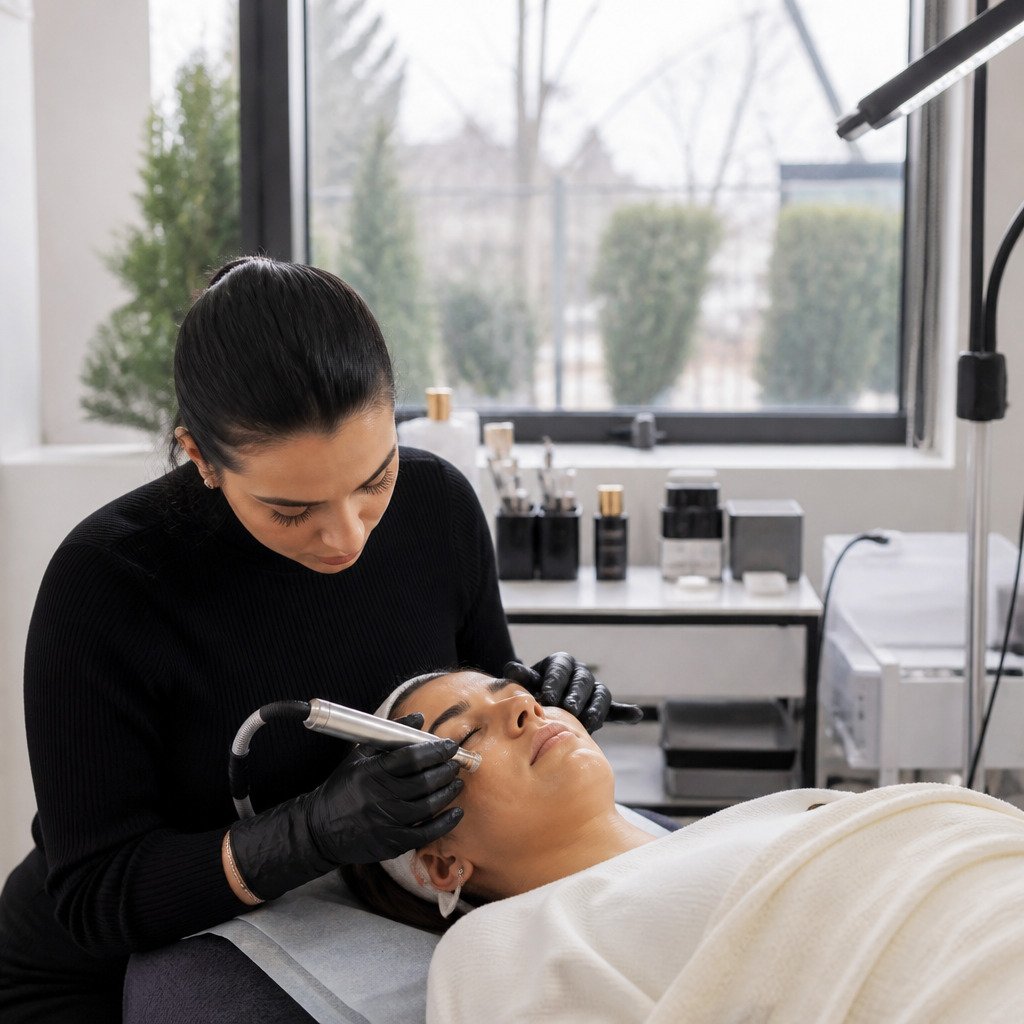
Microneedling is a treatment that uses fine needles to create tiny controlled punctures in the skin. If you are also comparing general facial options, our guide to glowing-skin facials walks through what each type offers. The body responds by producing new collagen, which can help smooth the look of some depressed scars over time.
Pros:
- Can improve the look of textured acne scars
- Generally involves less downtime than some laser options
- Can be adjusted to different needle depths
Cons:
- Requires several sessions spaced weeks apart
- Redness and sensitivity usually last a few days
- Results are gradual rather than immediate
Afterward, most people are advised to protect the skin from sun exposure and avoid harsh products for a short period. We recommend discussing your medical history and any active skin conditions with your provider first.
Chemical Peel for Acne Scars: Pros, Cons, and What to Expect
A chemical peel is a treatment that applies a controlled acid solution to remove the outer layer of skin (the FDA). The right strength depends on your skin.
Pros:
- Helpful for surface-level discoloration and dullness
- Usually quick to perform
- Available in a range of strengths
Cons:
- Deeper peels carry more risk of irritation or pigment changes
- Often requires a series of treatments
- Not every peel suits every skin tone or sensitivity level
A common mistake is choosing a peel that is too strong for your skin. A professional assessment helps prevent this.
Book your appointment online →
Laser Treatment for Acne Scars: Pros, Cons, and What to Expect
Laser treatments are a category of procedures that use focused light to resurface the skin. The right choice depends on your scar type and skin tone.
Pros:
- Can address deeper scarring when appropriate
- Customizable settings for different concerns
- Results can continue to develop over time
Cons:
- Typically needs more recovery time than peels or microneedling
- Requires an experienced provider to reduce risks
- Multiple sessions are often needed
Because laser settings vary, ask your provider which device they use and how they adjust it for your skin type.
Treatments for Deep Acne Scars and How Sessions Add Up
Deeper acne scars often take more than one visit to address, and changes are generally gradual.
A realistic session cadence
Treatment schedules for scarring vary by scar depth, how the skin responds, and the treatment chosen.
What improvement typically looks like
Texture changes from scar treatments are generally gradual, and deep scars may improve rather than disappear.
Aftercare that protects your results
- Sun protection: daily broad-spectrum sunscreen is the single most important step to prevent post-treatment discoloration.
- Gentle skincare: avoid harsh scrubs and active acids until your provider clears them.
- Acne control: keeping new breakouts calm reduces the chance of new marks forming.
- Hydration and barrier care: moisturizer supports healing between sessions.
Maintenance between courses
Maintenance is also part of the picture. Consistent sun protection, gentle skincare, and follow-up visits help preserve results. Some clients return for periodic maintenance sessions after the main course, while others focus on topical care at home. Your provider can outline a realistic schedule during your consultation.
Explore our premium facial services to see the treatment options we offer.
Booking Your Scar Consultation at Lash Box Syosset
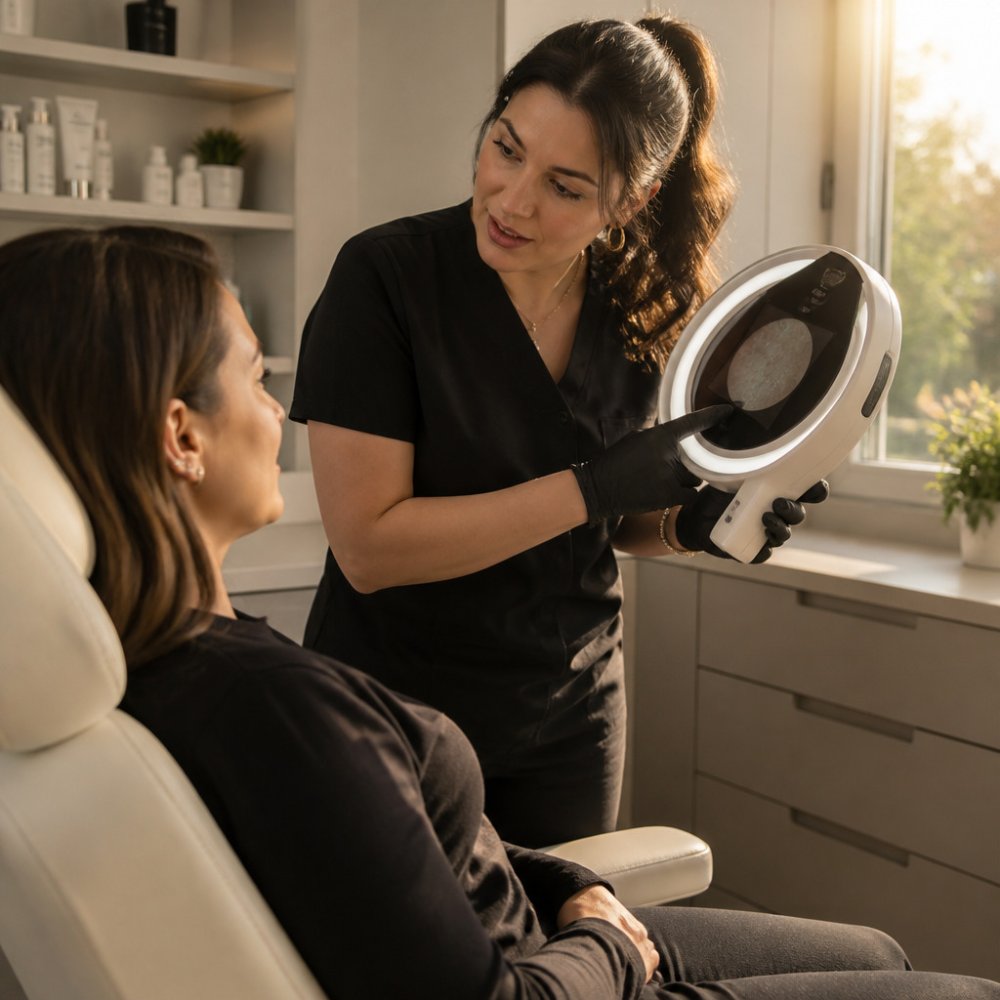
A consultation with a qualified professional is a sensible first step before choosing any treatment. You can also explore our permanent makeup services if you are interested in other beauty treatments we offer.
Ready to take the next step? Book your appointment through our online booking page at Lash Box Syosset. Visit lashboxny.com for current services and booking details.
Frequently Asked Questions
What is the best thing for scarring on your face?
No single treatment suits every scar. The best option depends on scar depth, texture, skin tone, and skin sensitivity. Shallow, mild marks often respond to chemical peels or topical therapy, while deeper pitting is more commonly addressed with microneedling or laser resurfacing. A licensed professional can assess your skin in person and recommend a plan. Results vary between people, and most improvement builds over several sessions rather than appearing after one visit.
Can a professional facial improve acne scars?
A professional facial can help some types of acne scarring, especially mild textural changes and post-inflammatory marks, which are flat discolorations left after a breakout. Deeper pitted scars usually need procedures such as microneedling, laser resurfacing, or a series of treatments. A standard relaxing facial is not designed to remodel scar tissue. Ask your esthetician which treatment fits your concern and what results are realistic for your skin.
How many treatments might acne scarring require?
The number of sessions depends on scar depth, the treatment chosen, and how your skin responds. Many people need a series of visits spaced several weeks apart, and some need periodic maintenance afterward. Your provider can outline an expected session count during a consultation. Be cautious with any plan that promises a fixed result after a single visit, because scar improvement is gradual and individual.
Should I see a dermatologist before choosing a treatment for facial scars?
It is a good idea to get a professional evaluation before starting any scar treatment, particularly if your skin is sensitive, you have a history of keloids or unusual scarring, you take medications that affect healing, or you are unsure what type of mark you have. A dermatologist can diagnose the scar type and rule out other skin conditions.
