Last Updated: October 23, 2026
Quick Summary
The best facial for glowing skin is a professional treatment designed to brighten your complexion, improve texture, and give you that coveted radiant glow by removing dead skin cells, hydrating deeply, and addressing your specific concerns. The right choice depends on your skin type, whether that's dullness, dehydration, or texture issues.
- Brightening facials restore radiance through exfoliation, vitamin C serums, and LED light therapy to stimulate circulation.
- Hydrating facials use hyaluronic acid and glycerin to plump skin and deliver a dewy, luminous finish lasting days.
- Chemical exfoliation with acids works best for sensitive skin, while physical exfoliation delivers faster results for resilient skin.
- Your skin typically looks best 3-5 days after a facial, so schedule important events accordingly.
- Consistency matters more than frequency; regular facials maintain hydration and prevent problems before they start.
Table of Contents
- What Makes a Facial the Best for Glowing Skin
- Best Facial for Dull Skin: Brightening and Radiance
- Hydrating Facial Benefits: Why Moisture Matters for Glow
- Professional Facial Treatment Options That Deliver Results
- How Often to Get a Facial for Glowing Skin
- Facial Aftercare Tips for Lasting Radiance
- Choosing the Right Facial for Your Skin Type and Concerns
- Conclusion: Your Path to Glowing Skin
- Frequently Asked Questions
What Makes a Facial the Best for Glowing Skin
A best facial for glowing skin is a professional treatment designed to brighten your complexion, improve texture, and give you that coveted radiant glow. The right facial removes dead skin cells, hydrates deeply, and addresses your specific concerns.
Not all facials work the same way. Some focus on exfoliation, others on hydration or anti-aging. The best choice depends on your skin type, concerns, and goals.
At Lash Box Syosset, we help clients find facials that match their unique needs.
Best Facial for Dull Skin: Brightening and Radiance
Dull skin lacks luminosity and looks tired, even after sleep. Brightening facials restore radiance by:
- Removing dead skin cell buildup
- Infusing brightening serums with vitamin C or similar ingredients
- Stimulating circulation to bring oxygen and nutrients to skin
- Smoothing texture so light reflects evenly
A brightening facial typically includes gentle exfoliation, a hydrating mask, and targeted serums, often with LED light therapy.
Hydrating Facial Benefits: Why Moisture Matters for Glow
Glowing skin is hydrated skin. When skin lacks moisture, it looks flat and less radiant. A hydrating facial floods skin with moisture and locks it in.
Hydrating facials deliver benefits like:
- Deep moisture infusion that plumps fine lines
- Improved skin texture and smoothness
- A dewy, luminous finish that lasts days
- Relief from dry, tight, or uncomfortable skin
- Better absorption of your at-home skincare products
These facials use serums, masks, and infusions rich in hyaluronic acid, glycerin, and other humectants that draw water into skin and help it stay there. If your skin feels tight or looks dull from dehydration, a hydrating facial is your answer.
Professional Facial Treatment Options That Deliver Results
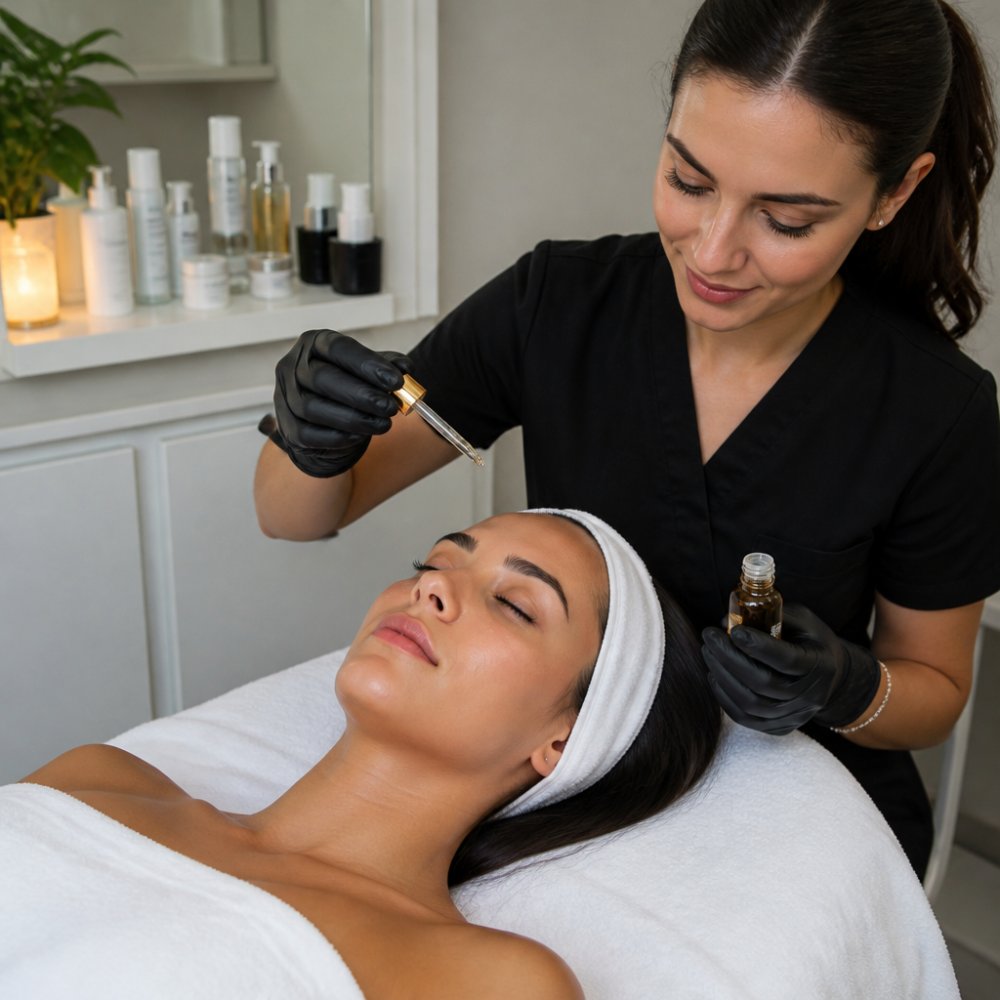
Professional facials go deeper than at-home routines. An esthetician can customize treatments, use professional-grade products, and apply techniques that transform skin. The options below are often used to create a glow, each through a different mechanism.
Deep-Cleansing Facials and Exfoliation
Deep-cleansing facials remove impurities, unclog pores, and slough away dead skin cells. Exfoliation is the key to glowing skin because it reveals the fresh, bright skin underneath.
There are two main types of exfoliation:
Chemical exfoliation uses acids or enzymes to dissolve dead skin cells. It's gentler than physical exfoliation and works well for sensitive skin. Common examples include alpha-hydroxy acids (glycolic, lactic) and beta-hydroxy acid (salicylic), especially useful for oily and acne-prone skin. Estheticians adjust strength and leave-on time to your tolerance.
Physical exfoliation uses a scrub, brush, or tool to manually remove dead cells.
Both methods improve texture, reduce dark spots, and brighten your complexion. The best choice depends on your skin's sensitivity.
Deep-cleansing facials often include:
- Gentle or chemical exfoliation
- Extractions to clear clogged pores
- A hydrating or treatment mask
- Serums tailored to your skin type
After a deep-cleansing facial, your skin feels smooth, looks brighter, and is primed to absorb your skincare products better.
Dermaplaning
Dermaplaning is a form of physical exfoliation that uses a sterile, single-use surgical blade to gently scrape away dead skin cells and fine facial hair (peach fuzz).
It's generally best for normal to dry skin and usually avoided on active acne, very sensitive skin, or broken capillaries. Because it's a manual technique, provider skill matters; ask how the blade is handled and what aftercare is recommended.
Chemical Peels
A chemical peel applies an acid solution to remove a controlled layer of skin, prompting fresh skin to surface. Peels range from very light (little to no downtime, brief flaking) to medium (visible peeling, several days of recovery).
Glow from a peel comes from removing dull surface cells and, over a series, encouraging smoother, more even-toned skin. Peels aren't one-size-fits-all: darker skin tones and people prone to hyperpigmentation need a provider experienced in selecting appropriate acids and strengths to avoid post-inflammatory darkening.
Microneedling
Microneedling uses fine needles to create controlled micro-channels in the skin. The body responds by producing collagen and elastin, which over weeks can improve texture, fine lines, and scars. The channels also let topical serums penetrate more effectively.
This is deeper than a standard facial. It typically involves numbing, some redness for a day or more, and a series of sessions spaced weeks apart.
HydraFacial-Style Deep Cleansing
HydraFacial is a branded treatment combining cleansing, gentle exfoliation, extraction, and hydration in one session using a device that suctions debris while delivering serums. Many spas offer similar "hydradermabrasion" treatments under different names.
Because it's gentle, it suits many skin types, including sensitive skin, though anyone with active breakouts or recent cosmetic procedures should check with their provider first. Results are visible right away but temporary, so it's often scheduled monthly.
LED Light Therapy and Advanced Treatments
LED light therapy uses specific wavelengths of light to treat skin concerns. Different colors target different issues:
Book your appointment online →
- Red light reduces inflammation, boosts collagen, and improves skin texture
- Blue light targets acne-causing bacteria and helps clear breakouts
Many professional facials now include LED therapy to enhance results. It's non-invasive, painless, and works well with all skin types. It is often used as a finishing step after exfoliation or extraction.
These treatments require professional expertise and proper aftercare. Before you commit, ask your esthetician about realistic downtime, required aftercare, and how many sessions are typically needed.
How Often to Get a Facial for Glowing Skin
How often you get a facial depends on your skin type, concerns, and goals. Consistency matters more than frequency. Regular facials keep your skin glowing because they maintain hydration, remove buildup, and prevent problems before they start.
Facial Aftercare Tips for Lasting Radiance
What you do after your facial matters as much as the treatment. Proper aftercare extends results and keeps your glow going.
Immediately after your facial:
- Avoid touching your face for at least 6 hours
- Skip makeup for 24 hours if possible to let your skin breathe
- Use only gentle, fragrance-free products for the next 48 hours
- Avoid hot water, saunas, and steam for 24 hours
For the next week:
- Apply sunscreen daily (SPF 30 minimum)
- Skip exfoliating products at home
- Avoid active ingredients like retinol or vitamin C
- Stick to your gentle skincare routine
- Stay hydrated by drinking plenty of water
To maintain your glow:
- Use the skincare products recommended by your esthetician
- Apply sunscreen every day, even on cloudy days
- Stay hydrated inside and out
- Get enough sleep
- Manage stress, which can trigger breakouts and dull skin
Your skin will look best 3-5 days after a facial, when hydration peaks and any redness has faded. Plan important events accordingly.
Choosing the Right Facial for Your Skin Type and Concerns
The best facial for glowing skin matches your skin type, main concern, and how much downtime you can accept.
If you have oily or acne-prone skin: Choose a deep-cleansing or clarifying facial with exfoliation.
If you have dry or sensitive skin: Go for a hydrating facial with gentle exfoliation or a soothing mask.
If you have mature skin: Look for facials with anti-aging ingredients, collagen-boosting treatments, or LED red light therapy.
Match the Treatment to Your Downtime
Downtime is often the deciding factor:
- No downtime: hydrating facials, LED therapy, gentle HydraFacial-style treatments. You can usually return to normal activities the same day, though makeup is often skipped for 24 hours.
- Minimal downtime: light chemical peels and dermaplaning. Expect mild redness or light flaking for a day or two.
- Some downtime: medium peels and microneedling. Redness and peeling can last several days, and you'll need to avoid intense exercise, heat, and sun exposure during recovery.
If you have an event coming up, schedule the gentlest option at least a few days ahead. Your skin typically looks best 3-5 days after a facial.
Results Timeline and How Long Glow Lasts
Glow is not one thing. A hydrating facial plumps skin and gives a dewy finish lasting a few days to a week. Exfoliating treatments brighten immediately but fade as dead cells build up.
A single facial can make skin look fresher and smoother. Ask your esthetician what timeline to expect for your specific treatment.
Safety and Who Should Check First
Some treatments are not right for everyone. Tell your esthetician about:
- Pregnancy or breastfeeding
- Active acne, cold sores, or skin infections
- Recent cosmetic procedures, waxing, or laser treatments
- Medications that increase sun sensitivity, such as some acne treatments and retinoids
- Known allergies to acids, fragrances, or topical ingredients
If you are unsure, a consultation is the safest first step. A qualified esthetician will ask about your history and may recommend a gentler option.
How to Vet a Provider
Ask whether the esthetician is licensed in your state, what training they have with the specific treatment you want, and how they customize for your skin type. A good provider explains the steps, expected downtime, and aftercare before starting. If a treatment is pushed without questions about your skin history, that's a reason to pause.
Conclusion: Your Path to Glowing Skin
Glowing skin is achievable with the right professional facial and consistent care. The best facial for glowing skin combines exfoliation, hydration, and targeted treatment for your concerns.
Whether you need brightening, hydration, or deep cleansing, a professional facial delivers results you can see and feel. Regular treatments keep skin radiant, healthy, and glowing.
Ready to start your glow-up journey? Visit Lash Box Syosset's facial services to explore our treatment options and book your appointment online.
Frequently Asked Questions
What is the best facial for glowing skin if I have sensitive skin?
If your skin is sensitive, look for gentle facials that focus on hydration and calming ingredients rather than aggressive exfoliation. A hydrating facial with soothing serums and light extractions can improve radiance without irritation. Avoid chemical peels or strong treatments until you know how your skin responds. Talk with your esthetician about your sensitivity concerns before booking, they can customize the treatment to your needs.
How long does the glow from a facial actually last?
Most people see an immediate glow after a facial, thanks to improved hydration, exfoliation, and increased circulation. To extend the results, follow proper aftercare, avoid sun exposure, use a good moisturizer, and stay hydrated.
Can a facial actually help with acne scars and deeper skin concerns?
Professional facials can improve the appearance of acne scars and fine lines, especially treatments that include exfoliation or LED light therapy. These methods stimulate skin rejuvenation and collagen production over time. Discuss your specific concerns with a professional esthetician who can recommend the best approach for your skin's needs.
What should I avoid after a facial to keep my skin glowing?
After a facial, avoid direct sun exposure, hot water, heavy makeup, and intense exercise for at least 24 hours. Your skin is more sensitive and can be irritated easily. Skip exfoliating products, retinol, and active ingredients for a few days. Instead, use a gentle cleanser, hydrating serums, and broad-spectrum sunscreen. Keep your skin moisturized and avoid touching your face unnecessarily to prevent bacteria and irritation.
Glowing skin doesn't happen by accident, it takes the right treatment and consistent care. At Lash Box Syosset, we offer professional facials tailored to your skin type and concerns. Our estheticians use professional-grade products and advanced techniques to deliver real results. Book your facial today and discover what a difference professional skincare makes. Visit lashboxny.com to schedule your appointment.
