Last Updated: November 12, 2026
Quick Summary
The best facials depend on whether your concern is acne scarring or wrinkles, because the two have different causes. Superficial peels suit surface concerns like uneven tone and dark acne marks, while microneedling can address rolling and shallow scars and fine lines through collagen support.
- Acne scars and wrinkles have different causes, so one facial rarely fixes both.
- Superficial peels use mild acids and are the gentlest option for surface concerns.
- Peels usually do not lift deep rolling or boxcar scars.
- Microneedling works on collagen and usually needs more than one session.
- Darker skin tones carry higher risk of post-inflammatory hyperpigmentation, so a consultation matters.
Table of Contents
- Why One Facial Rarely Fixes Both Acne Scars and Wrinkles
- Chemical Peels for Acne Scars and Wrinkles
- Microneedling for Acne Scars and Wrinkles
- Best Facial for Acne Scars and Hyperpigmentation
- Professional Laser and Resurfacing Options to Discuss
- Best Facial Treatment for Aging Skin at Home
- Booking Your Consultation at Lash Box Syosset
- Frequently Asked Questions
Why One Facial Rarely Fixes Both Acne Scars and Wrinkles
Acne scars and wrinkles are different problems. Acne scars form when the skin loses or disrupts collagen after inflammation, while wrinkles come from repeated movement, sun exposure and gradual collagen loss over time. Because the causes differ, a single facial usually addresses one concern more effectively than the other.
Many people who search for the best facials for acne scarring and wrinkles are hoping for one answer that does everything, so our advice is to look for the best facials for your specific concern rather than a single cure-all. You can compare how advanced facials perform on deep wrinkles before deciding. A more realistic approach is to match the treatment to the scar type, skin tone and wrinkle depth, then build a plan around it.
Some options overlap.
Chemical Peels for Acne Scars and Wrinkles
Chemical peels use medical-grade acids to remove the outer layers of skin so fresher skin can surface. The strength of the peel, not just the acid used, determines how deeply it works and what it can realistically improve.
How peels are classified
- Superficial peels use mild acids such as salicylic acid, glycolic acid, or low-strength trichloroacetic acid (TCA). They exfoliate the top layer of skin and are the gentlest option.
- Medium peels use stronger TCA, sometimes combined with other acids, and reach deeper into the skin. They produce more visible change but also more downtime.
- Deep peels use high-strength TCA or phenol and are reserved for significant concerns. They carry more risk and require a qualified medical provider.
What peels can and cannot do
Peels tend to work best on surface-level concerns: uneven tone, dark marks left by acne (post-inflammatory hyperpigmentation), dull texture, and fine lines. They can soften the look of shallow acne marks and refine the appearance of fine lines around the eyes and mouth.
Peels are not a strong option for deeper structural scars. If you are weighing peels for scarring, see whether professional facials are worth it for scarring before committing. Ice pick, boxcar, and rolling scars involve changes below the surface, and a peel alone usually will not fill or lift them. For those, a provider will often suggest microneedling, laser resurfacing, or a combination plan.
Skin tone matters
Darker skin tones carry a higher risk of post-inflammatory hyperpigmentation after a peel, especially with stronger acids. A trained provider will often start with a gentler peel, do a small test area, and build up gradually. This is one reason a consultation matters more than picking a peel from a list.
Sessions and timeline
Superficial peels are commonly done in a series, often several sessions spaced a few weeks apart, with gradual improvement rather than one dramatic change. Medium peels may need fewer sessions but involve more peeling and recovery. Most people see some freshness within days and more meaningful texture change over a series of visits.
Pros:
- Improves surface texture, uneven tone, and dark acne marks
- Strength can be adjusted to suit different skin types and goals
- Superficial peels usually involve less downtime than deeper resurfacing
Cons:
- Deep rolling or boxcar scars usually need a different or additional treatment
- Risk of post-inflammatory hyperpigmentation, especially on darker skin tones
- Sun protection afterward is essential to protect new skin
Watch out: picking at peeling skin or skipping sunscreen after a peel can undo the results and trigger new dark spots.
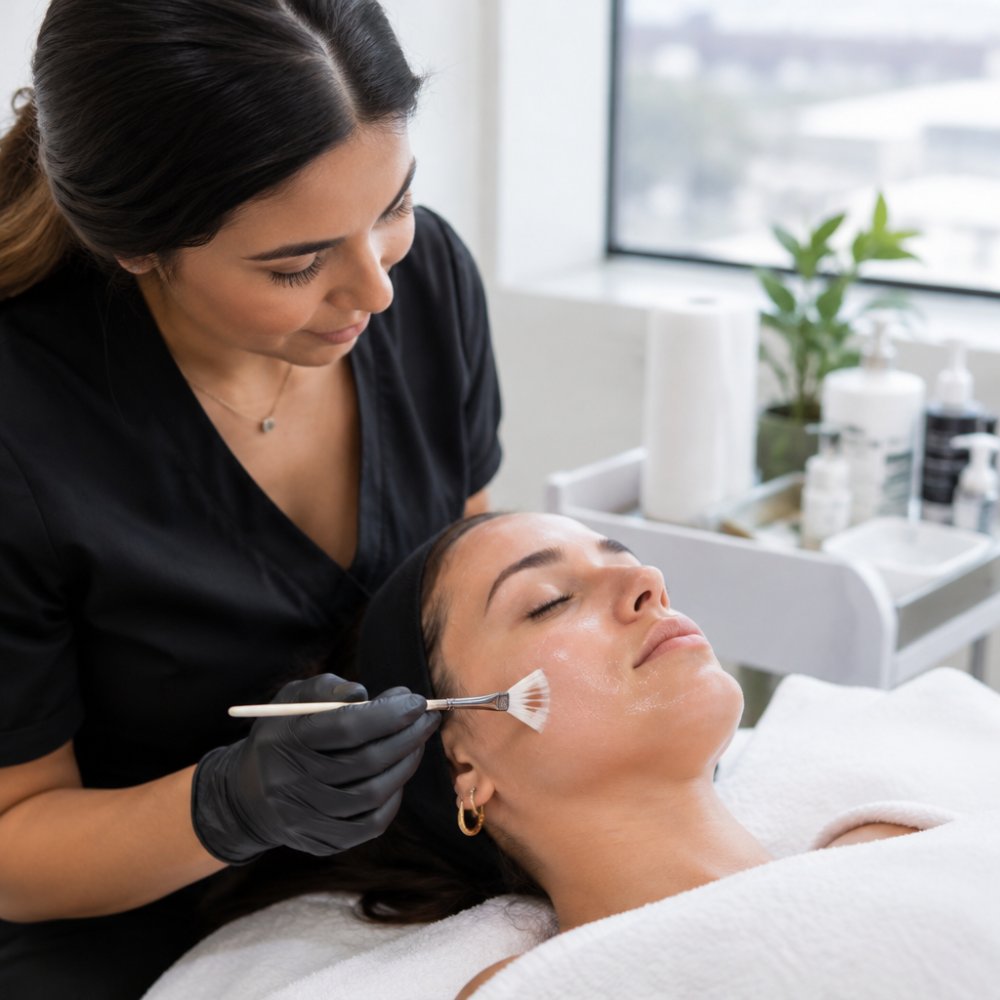
The right peel depends on how deep the concern goes, so here is how the three main strengths compare.
| Peel type | Best for | Key difference |
|---|---|---|
| Superficial | Uneven tone, dark acne marks, dull texture | Mildest acids, least downtime |
| Medium | Visible tone and texture change | Stronger TCA, more peeling and recovery |
| Deep | Significant concerns | High-strength TCA or phenol, needs a medical provider |
Microneedling for Acne Scars and Wrinkles
Microneedling uses a device with fine sterile needles to create tiny controlled punctures in the skin. The body responds by producing new collagen and elastin, which is why it is one of the more commonly discussed options for both acne scarring and fine lines.
Why it can address both concerns
Because microneedling works on collagen rather than only the surface, it can improve skin texture, soften the look of shallow scars, and refine fine lines at the same time. It is often compared with laser treatments for these reasons, and some providers combine microneedling with radiofrequency energy or topical serums to boost results.
Which scars respond best
Microneedling tends to work best on rolling scars and shallow boxcar scars, where the skin has lost collagen but the surface is not deeply pitted. Ice pick scars are narrower and deeper, and they often need a different approach. A provider will assess scar type before recommending a plan. Because scar depth and texture can shape the choice between microneedling and laser resurfacing, Lumyn Medspa can help frame that comparison when planning treatment.
Skin tone considerations
That said, darker skin tones still carry some risk of post-inflammatory hyperpigmentation, so technique, needle depth, and aftercare matter. A trained professional will adjust the approach accordingly.
Sessions and timeline
Most people need more than one session, commonly a series spaced several weeks apart, for noticeable change. Collagen remodeling takes time, so improvements usually appear gradually over weeks to months rather than immediately after the first visit. Maintenance sessions may be suggested to keep results.
Safety and what to expect
Temporary redness, mild swelling, and sensitivity are common for a day or two afterward. Providers typically advise avoiding active acne areas, and microneedling is not recommended over active breakouts, infected skin, or certain skin conditions. Anyone with a history of keloid scarring or who is pregnant should discuss it with a provider first.
Pros:
- Targets collagen for both scar and wrinkle improvement
- Generally suitable for many skin tones when performed by a trained professional
- Can be combined with other treatments in a customized plan
Cons:
- Usually needs more than one session for noticeable change
- Temporary redness and sensitivity are common afterward
- Not every scar type responds the same way, and deeper scars may need additional treatments
Watch out: at-home microneedling rollers sold online are not the same as professional devices, and improper use can irritate skin or cause infection.
Skin Laundry's comparison of microneedling and laser treatments
Best Facial for Acne Scars and Hyperpigmentation
When acne has left both scars and dark marks, the best choice often depends on which concern is more visible. Deep texture may call for microneedling or resurfacing, while dark spots often respond well to peels or brightening treatments.
A consultation with a qualified esthetician can help assess your skin before recommending a treatment. Results and timelines vary, so no single facial works for everyone.
Professional Laser and Resurfacing Options to Discuss
It is often compared with microneedling and chemical peels because all three address texture and scarring.
Best Facial Treatment for Aging Skin at Home
Professional treatments do the heavy lifting, but home care supports the results. A gentle cleanser, a daily moisturizer and broad-spectrum sunscreen protect the skin and help prevent new wrinkles and dark spots from forming.
Retinoids and vitamin C serums are often recommended for texture and tone, though they should be introduced slowly. If your skin is irritated or you are recovering from a professional treatment, check with your provider before adding active ingredients.
Consistency matters more than intensity. A simple routine you can follow every day usually does more than an elaborate one you abandon after a few weeks.
Booking Your Consultation at Lash Box Syosset
Choosing between treatments is easier after a professional assessment with a qualified provider. You can explore our facial services in Syosset or learn more about lash extensions in Syosset if you are planning a complete beauty routine.
Visit lashboxny.com to see current services and book your appointment online.
Frequently Asked Questions
What facial is best for acne scarring?
No single facial works for every scar. Several professional options are discussed for acne scarring, and the right choice depends on scar depth, skin tone, and how much downtime you can handle. Shallow scars often respond differently than deeper rolling or boxcar scars. A licensed esthetician or dermatologist can assess your skin and recommend a plan. Ask about the expected number of sessions, recovery time, and whether a combination approach makes sense for your skin.
Can one facial treatment help with both acne scars and wrinkles?
Some professional treatments address both concerns, because they stimulate collagen production in the skin. Some professional treatments are often discussed for both acne scarring and fine lines. However, results vary, and many people need multiple sessions over several months. Standard cleansing or extraction facials mainly refresh the skin and are not designed to treat deep scars or established wrinkles. Discuss your specific goals before booking.
How many facial treatments are usually needed to improve acne scars?
Most professional treatments for acne scarring are given as a series rather than a single visit. The number of sessions depends on scar depth, the treatment chosen, and your skin's response. Many providers space sessions several weeks apart to allow the skin to heal between treatments. Maintenance sessions may be recommended afterward. Your provider can give you a more specific estimate after evaluating your skin at your consultation.
What should I ask an esthetician before booking a facial for acne scars and wrinkles?
Ask about their training and licensing, and whether they have experience treating your specific concern. Find out which treatments they recommend for your scar type and skin tone, what recovery looks like, and what results are realistic. Ask how many sessions are typically needed and whether a combination approach is suggested. Also ask about contraindications, such as active acne, recent sun exposure, or certain medications. For current services and booking, visit lashboxny.com.
