Table of Contents
- How Mature Skin Changes Affect Permanent Makeup
- Permanent Makeup for Thinning Eyebrows: Powder, Nano and Combination Options
- Permanent Eyeliner for Aging Eyes
- Medical Suitability, Medications and Skin Conditions to Discuss First
- The Permanent Makeup Healing Process for Mature Skin
- Choosing a Permanent Makeup Artist for Seniors
- Booking Your Natural-Looking Consultation at Lash Box Syosset
- Frequently Asked Questions
Last Updated: November 4, 2026
Permanent makeup for seniors is a popular request among mature clients, and it's easy to see why. As skin matures, brows thin, lash lines soften and makeup that used to last all day starts to fade by lunchtime. Permanent makeup, sometimes called cosmetic tattooing, can add soft definition that stays in place without the daily routine. The goal is a result that looks like you on a good day, not a result that looks like a costume.
This guide walks through seven practical facts about natural-looking permanent makeup for mature skin. We cover how aging skin changes the process, which options suit thinning brows, what to know about permanent eyeliner, which health questions to raise before booking, how healing works, how to choose an artist, and what to expect from a consultation.
How Mature Skin Changes Affect Permanent Makeup
Mature skin is thinner, drier and less elastic than younger skin, and that changes how pigment settles. Pigment placed in thinner skin can soften and spread more over time, so a skilled artist plans for slightly softer edges from the start. This is why gentle technique and conservative depth matter more for older clients.
Pigment retention also varies. Skin that has lost collagen may hold color differently, and some fading is normal. Tell your artist about any previous permanent makeup, tattoos or color you have had, because older pigment can shift or appear grayish and may need to be addressed first.
Permanent Makeup for Thinning Eyebrows: Powder, Nano and Combination Options
Thinning brows are a common reason adults over 50 seek permanent makeup. The three main techniques look different, heal differently, and suit different skin. Here is a plain-language comparison to help you narrow the choice before your consultation.
Powder brows use a shading technique to create a soft, misty wash of color, similar to brow powder or a lightly filled-in brow. For a direct comparison, see microblading vs powder brows. Learn more about permanent makeup services at Lash Box Syosset. The result is diffused rather than hair-by-hair. Powder brows tend to suit clients who want gentle density and a polished, makeup-like finish, and they can be a good fit for oilier skin or brows with very little hair. Because the color is soft, the healed result usually looks lighter than it does in the first week.
Nano brows use a very fine needle to place tiny, hair-like strokes that mimic individual brow hairs. The effect is feathery and realistic up close. Nano work suits clients who still have some natural hair to blend with and who want a more textured look. Very thin or fragile mature skin can make crisp strokes harder to maintain, so an artist may recommend softer strokes or a combination approach.
Combination brows blend shading with hair-like strokes, adding density where brows are sparse and texture where hair remains. Many mature clients like this middle path because it can look full without looking drawn on.
A simple way to think about the decision:
- Choose powder if you want soft fullness and a makeup-like finish.
- Choose nano if you want visible hair texture and have some natural brow hair to work with.
- Choose combination if you want both density and texture and your artist confirms your skin can support strokes.
Skin type matters as much as preference. Mature skin is thinner and less elastic, so pigment can soften and spread more over time. An artist who works with older clients will often plan slightly softer edges and conservative depth from the start, and will tell you honestly if a technique is likely to blur faster on your skin.
Healing and longevity differ by technique too. Powder brows often look darker and more defined for the first week before softening. Nano strokes can appear crisp initially and then soften as the skin recovers. Combination brows follow a mix of both patterns. Touch-ups after healing are often part of the process to refine shape and color, and long-term fading varies with skin type, sun exposure, and aftercare.
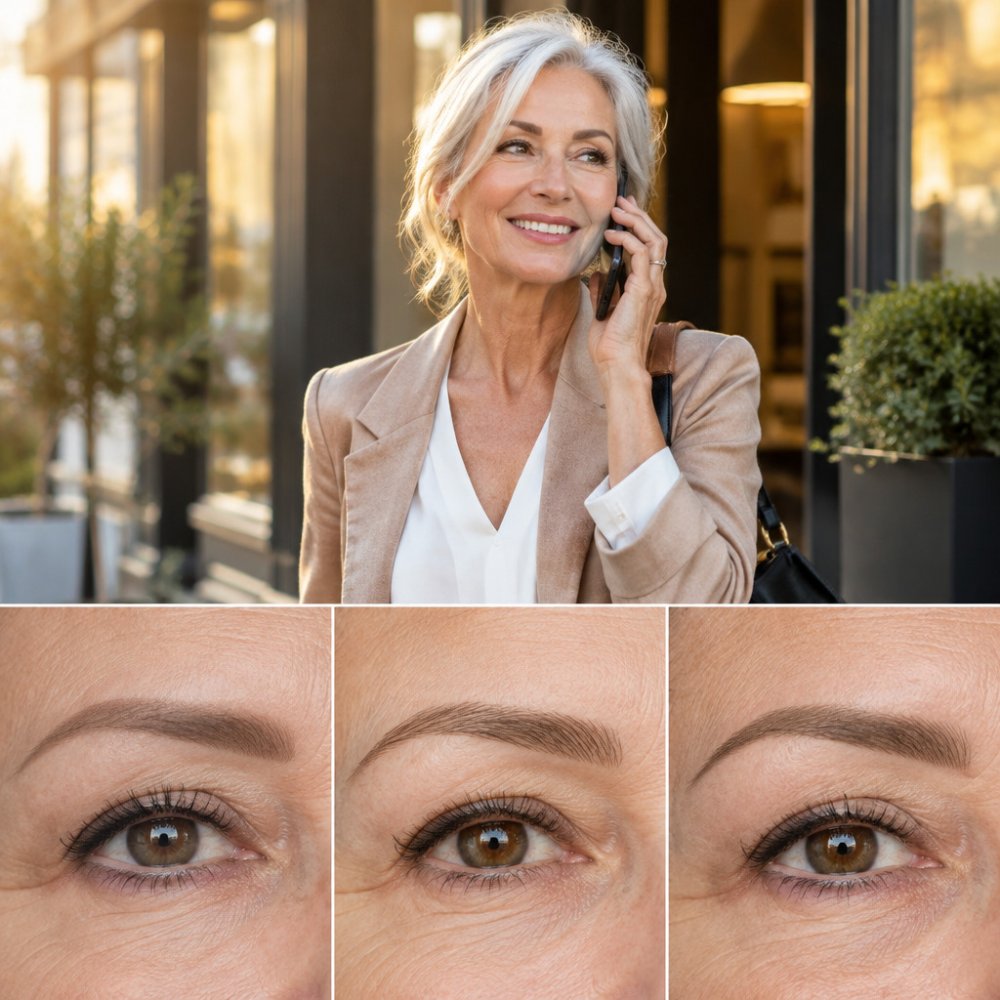
A consultation is the best place to compare options on your own face. Ask to see healed work on clients with similar skin and brow density, not only fresh photos. Pricing depends on the technique and the work involved, so ask for a quote tailored to your brows. You can review current services and book a consultation at lashboxny.com.
Here is a quick side-by-side look at the three main brow techniques discussed above.
| Technique | Best for | Key difference |
|---|---|---|
| Powder | Soft fullness, makeup-like finish | Diffused shading, not hair-by-hair |
| Nano | Visible hair texture | Fine hair-like strokes |
| Combination | Density and texture | Blends shading with strokes |
Permanent Eyeliner for Aging Eyes
As the upper lid loses fullness, lash lines can look sparse and eyes can appear smaller. Permanent eyeliner is designed to define the lash line subtly, often as a soft, close-set line rather than a dramatic wing. For many clients over 50, the aim is to add definition that brightens the eyes without looking heavy.
Eyelid skin is extremely delicate, so this area calls for especially gentle work and conservative color. Ask your artist how they adapt technique for thinner, more sensitive lids, and whether they recommend a softer shade over a deeper black.
Medical Suitability, Medications and Skin Conditions to Discuss First
Permanent makeup is not right for everyone, and older adults often take medications or have health conditions that affect healing. Before booking, be ready to discuss:
- Blood-thinning medications or supplements that can increase bleeding
- Diabetes, immune conditions or other conditions that affect healing
- Recent or current treatments such as Botox, fillers, chemical peels or laser work in the same area
- Skin conditions such as eczema, psoriasis, rosacea, keloid scarring or active dermatitis
- A history of cold sores if lip work is being considered
- Any allergies to pigments, numbing agents or topical products
Some of these are reasons to wait, and some are reasons to involve your doctor first. Your doctor can tell you whether a procedure is appropriate for your health. Your artist should ask detailed questions and may decline work that isn't safe for you. Honest screening protects you.
Book your appointment online →
The Permanent Makeup Healing Process for Mature Skin
Healing usually takes several weeks, and older skin often heals more slowly. Knowing what each stage looks like helps you avoid worry and protects your result.
Days 1-3: The area looks darker, sharper, and more defined than the final result. Some redness and mild swelling are common, especially with eyeliner or lip work. Keep the area clean and follow your artist's instructions on washing and ointment.
Days 4-7: Color may look patchy or uneven as the surface begins to flake. This is normal. Do not pick or scrub. Mature skin can be drier, so flaking may be more noticeable.
Weeks 2-4: The color softens and settles. The final result is usually judged after this period, which is why a touch-up is planned after healing rather than immediately.
Typical aftercare includes keeping the area clean and dry as instructed, avoiding picking or scrubbing, protecting the area from sun and heavy sweating, and avoiding certain products until your artist clears you. Follow your artist's guidance closely and ask what to expect at each stage.
For seniors, comfort and accessibility matter as much as aftercare. Appointments can run long, so ask about length and whether breaks are possible. If you have vision or mobility needs, tell the studio in advance so positioning and support can be arranged. A support person is often welcome, and it helps to have someone drive you home after eyeliner or lip work. Pain management is individual; numbing products are commonly used, and your artist should explain what to expect.
Balanced expectations matter too. Permanent makeup carries risks including infection, allergic reaction, scarring, and pigment migration, and correction has limits (the FDA). Old pigment should be assessed before adding new work. If you have a history of cold sores, keloid scarring, or reactions to numbing agents, raise it before booking. Your doctor can advise whether a procedure is appropriate for your health, and your artist may decline work that isn't safe for you.
Plan for a touch-up appointment after healing if your artist recommends one. Retention and fading vary from person to person. For current services and booking, visit lashboxny.com.
Choosing a Permanent Makeup Artist for Seniors
Look for an artist who has experience with mature clients and can show healed work, not only fresh photos. Useful questions include:
- How many years have you performed permanent makeup, and how often do you work with clients over 50?
- Can you show healed results on skin similar to mine?
- What training or certification do you have? Ask for specifics rather than general claims.
- How do you handle pigment selection and color correction for older skin?
- What is your aftercare plan, and what does a touch-up cost?
- How do you handle medical screening before treatment?
A good artist will welcome these questions and explain their answers clearly. Be cautious of anyone who rushes the decision or avoids discussing health history.
Booking Your Natural-Looking Consultation at Lash Box Syosset
A consultation is the best first step. A consultation is a good time to talk through your goals, review your health history, and ask your questions about healing and maintenance.
You can view our permanent makeup services and book online at lashboxny.com. For current services and availability, visit lashboxny.com.
Frequently Asked Questions
Is 70 too old for permanent makeup?
Age alone is rarely the deciding factor. Many people in their 70s choose permanent makeup to soften thinning brows or define eyes that have lost lash density. What matters more is overall health, skin condition and current medications. Some blood thinners, skin conditions and certain medical treatments can affect healing, so share your full health history during your consultation. A qualified artist will review that information with you before recommending a plan.
How long does permanent makeup last on mature skin?
Results vary with skin type, sun exposure, pigment choice and how the area was treated. On mature skin, pigment often fades faster and may soften over time, so many clients schedule touch-ups. Expect the color to look softer and less defined as years pass. Ask your artist about the expected longevity of the technique you are considering and how often maintenance visits are usually recommended.
Who should not get permanent makeup?
People with certain skin conditions, active infections, unmanaged medical conditions or some medications may not be good candidates. Pregnant or nursing clients and people with a history of keloid scarring should also discuss their situation with a physician first. A reputable artist will ask detailed health questions and may ask you to check with your doctor before proceeding.
What should seniors look for when choosing a permanent makeup artist?
Look for a trained, experienced artist who asks about your health, shows healed work and explains aftercare clearly. Ask how they select pigment for mature features and how they handle corrections. A good consultation should feel unhurried, with time for questions about comfort, expected results and total cost over time. Visit lashboxny.com to learn about current services and to book a consultation.
